
If you searched for sewer line repair cost and found a page that said "it depends on many factors," that page wasted your time. Here is the actual number breakdown from jobs we've done in Carrollton, Plano, Frisco, and across northern DFW.
Sewer Line Repair Cost by Method
Trenchless pipe lining (CIPP): $3,500 to $7,500 for a full main line 40 to 100 feet long. Shorter sections run $1,500 to $3,500. This is the no-dig option: a resin-coated liner is inserted and cured inside the existing pipe, creating a new pipe inside the old one.
Spot repair with excavation: $1,200 to $3,500 for a single break or root intrusion point. One dig, one repair, backfill and concrete patch included.
Full line replacement with excavation: $6,000 to $14,000 depending on length of the run, depth of the pipe, and what's in the way (concrete flatwork, landscaping, a deck). Most single-family home main lines run 50 to 80 feet from the house to the city connection. Depth varies from 3 feet to 8 feet in DFW.
Hydrostatic pressure testing: $300 to $600 if done as a standalone diagnostic. Included in the scope when we're doing a camera inspection before a foundation-related insurance claim or a home purchase. For more on this, see our hydrostatic sewer testing service.
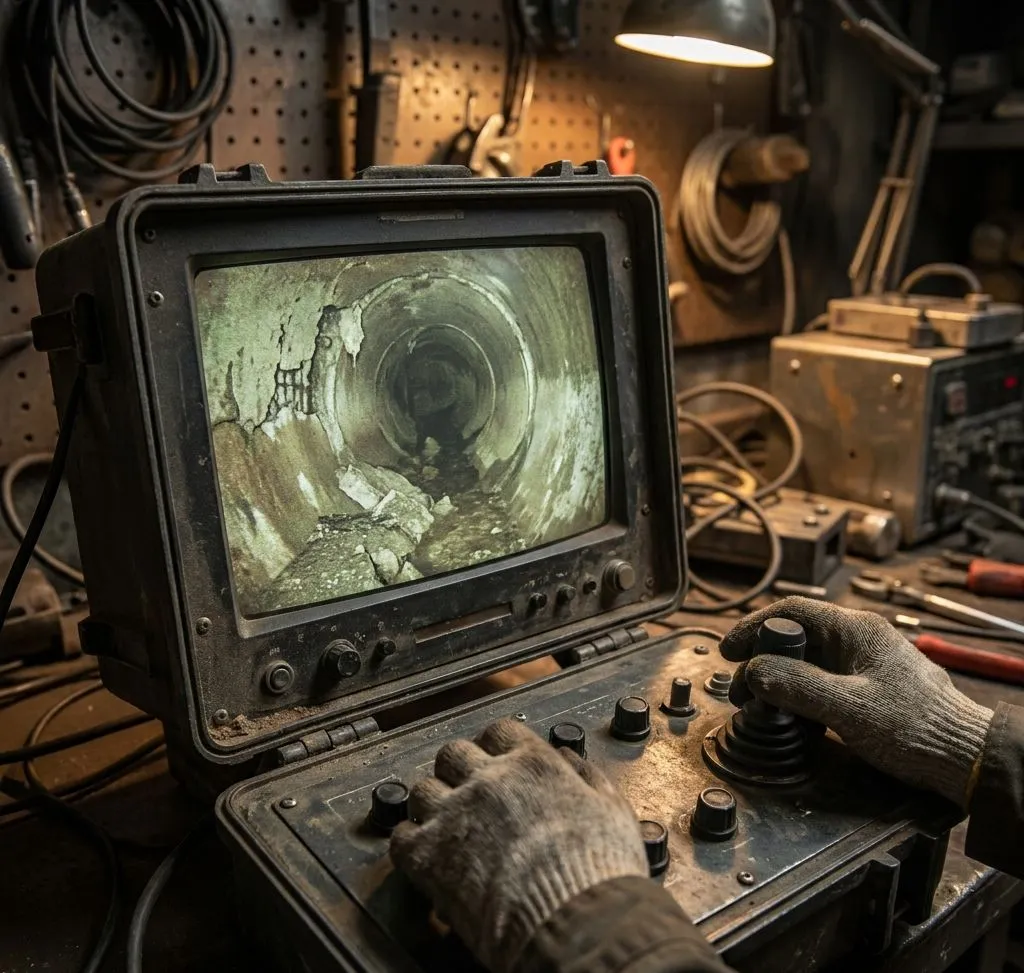
Sewer camera inspection: $250 to $450. This is the first step before any sewer repair recommendation. We record the inspection and show you the footage. No repair recommendation without a camera run first.
What Actually Drives the Price Up
Depth of the pipe. A sewer line at 3 feet deep is a half-day excavation. A pipe at 7 feet requires shoring, safety equipment, and significantly more labor. In some DFW neighborhoods, particularly older sections of Lewisville and Carrollton near the creek corridors, pipes run deep. Depth adds $500 to $2,500 to excavation jobs.
Material in the way. A concrete driveway over the sewer line means cutting and patching concrete. A wood deck over the repair zone means temporary deck removal and replacement. A mature tree with roots in the pipe adds complexity. Each of these is a real line item. We identify all of them on the camera inspection before we quote.
Pipe material. Cast iron and orangeburg pipe (found in some DFW homes built before 1960) are more difficult to line because the interior profile is irregular. PVC or ABS sewer laterals from more recent construction are easier and faster for both lining and excavation work.
Length of the affected section. A 20-foot root intrusion is a different job than a 75-foot collapsed line. CIPP lining is priced per linear foot plus mobilization. Excavation jobs have a baseline mobilization cost plus footage. We give you both numbers so you can see how the math works.
Time to the cleanout. If your home has an accessible cleanout at the property line, camera inspection and liner insertion are straightforward. If the cleanout is buried, inside a tight crawl space, or doesn't exist at all (common in pre-1980 DFW construction), we add that work to the scope.
The DFW-Specific Problem: Clay Soil and Old Sewer Materials
North Texas expansive clay soil is the biggest driver of sewer line damage in the metro. Homes built before 1985 in older Carrollton neighborhoods, Plano near Legacy, and Lewisville near Old Town often have cast iron or clay tile sewer lines that have absorbed 40 or 50 years of soil movement. The pipe joints separate. Root intrusion follows. The line partially collapses.
We wrote a longer piece on this specific problem: Why North Texas Clay Soil Cracks Your Sewer Lines. It explains the mechanism and when camera inspection gives you enough information to make a repair-vs.-replace decision.
The clay movement also creates a foundation issue that mirrors the sewer problem. A plumber who finds a cracked sewer line in a 1975 home in Carrollton should also flag whether the foundation is showing related distress. We do this on every job. A plumbing repair that ignores a structural condition doesn't solve the homeowner's problem.
Trenchless vs. Excavation: How to Choose
Trenchless pipe lining is not always the right call, despite what some contractors imply. Here is the honest comparison:
Trenchless is better when:
- The pipe is structurally intact enough to support the liner insertion
- The damage is cracks, root intrusion, or joint separation, not full collapse
- You want to preserve landscaping, driveway, or hardscape over the line
- The line is otherwise in decent shape beyond the damaged section
Excavation is better when:
- The pipe has fully collapsed or belly-sagged more than 6 inches (liner can't correct grade)
- The pipe interior is too corroded or irregular for liner adhesion
- The line has already been lined once and failed
- Access from a cleanout is blocked and the excavation is needed anyway
We do both. We recommend based on what the camera shows, not on which method has a higher margin.
What a Sewer Repair Job Actually Looks Like
Day 1 (camera inspection and diagnosis): We run a camera the full length of the line, record the footage, and locate specific problem points. If there are multiple issues, we map them. We then present repair options with written pricing before any work begins.
Day 2 (for trenchless lining): We clean the line thoroughly with a hydro jetter, insert the liner, inflate it against the pipe walls, and cure it with hot water or UV light depending on the liner system. Inspection camera confirms full adhesion. The line is functional within 4 hours of cure completion. No excavation.
Day 2 (for excavation repair): We locate the problem point precisely using the camera footage and a locator device. We excavate to the pipe, remove the damaged section, install new PVC with proper slope, backfill, and compact. Concrete flatwork patching if applicable. The repair is functional the same day. City inspection if a permit was required.
Sewer Camera Inspection Before Any Major Decision
Before you agree to any sewer repair work, you should have seen the camera footage. This is not optional. A plumber who quotes a full line replacement without a camera run first either guessed at the diagnosis or found a way to make the scope larger than it needs to be.
Camera inspection is $250 to $450. It takes 30 to 60 minutes. It gives you footage of every inch of your main line, confirms the specific damage type, and makes the repair recommendation defensible. If someone else quoted you repair work without this step, get a second opinion that includes the camera.
We also offer drain cleaning for situations where the camera shows root intrusion or grease buildup that doesn't require repair, just clearing.
What DFW Homeowners Actually Pay: Recent Job Examples
Abstract cost ranges help less than real examples. Here are a few representative jobs from the past 12 months in northern DFW:
Carrollton, 1972 ranch home: Camera showed a 30-foot section of collapsed clay tile sewer line at 5 feet depth. Full excavation, PVC replacement, concrete driveway cut and patch. Total: $6,800.
Plano, 1988 two-story: Root intrusion at two points on a 65-foot cast iron main line. Trenchless CIPP lining of the full 65-foot run. No excavation. Total: $5,200.
Frisco, 2002 suburban: Single offset joint at a belly sag 20 feet from the house cleanout. Spot excavation, PVC coupling repair, backfill. Total: $1,900.
Lewisville, 1995 home: Orangeburg sewer pipe (a compressed tar-paper material used briefly in the postwar era) that had fully collapsed at 3 points. Full line replacement with PVC, 55 feet, 4 feet depth. Total: $8,400.
The Colony, 2008 home: Camera showed grease buildup restricting flow to 30% of pipe diameter. No structural damage. Hydro-jetting cleared the line. Total: $450.
Every job starts with a camera. Every camera job gets a written quote before any work begins. See our sewer line repair service for the full process.
Frequently Asked Questions
Does homeowner's insurance cover sewer line repair? Standard Texas homeowner's policies typically exclude sewer line repair. Some policies offer a sewer line endorsement as an add-on. If you have it, the damage threshold and coverage limits vary. Call your adjuster before authorizing repair work so you know what to document.
How long does a trenchless sewer repair last? CIPP liners are warrantied for 50 years by most manufacturers. In practice, a properly installed liner in a DFW clay-soil environment should outlast the original pipe significantly. We've seen liners installed in the late 1990s still performing well.
Can roots grow back through a liner? Not through the liner itself. Roots intrude at joints in the original pipe. The liner covers those joints continuously with no gap. Root re-entry through the liner is not a real failure mode for properly cured installations.
How do I know if my sewer line needs repair vs. just cleaning? Camera inspection is the only way to know definitively. Slow drains throughout the house, sewage smell in the yard, or gurgling when you flush can indicate either blockage (cleaning) or structural damage (repair). We pull the camera before recommending anything. See the sewer camera inspection service for details.
Do you cover Grapevine, Little Elm, and The Colony? Yes. The full service area is northern DFW, and all three of those cities are in regular rotation for our sewer crews. Grapevine in particular has a lot of pre-1980 construction with original clay tile and cast iron we see frequently.