
The most common question I get before a repipe estimate is: "Just give me a ballpark." Fair enough. Here it is.
For a typical DFW home:
- 1,000-1,500 sq ft with PEX: $4,500 to $6,500
- 1,500-2,500 sq ft with PEX: $6,500 to $9,500
- 2,500-3,500 sq ft with PEX: $9,500 to $13,000
- Same size homes with copper instead of PEX: add $2,000 to $3,500
Those are installed prices. Labor, materials, access patching, and permit are included. What they don't include is drywall finishing if you want a painted wall versus a patched hole. We patch. Paint matching is a separate contractor.
Why Repipe Costs Vary So Much in Dallas
Every quote I give is different because three things change the labor dramatically:
1. How accessible your lines are. A single-story ranch with an unfinished utility room and an accessible attic takes half the time of a two-story home where every supply line is buried behind finished drywall and tile. On the ranch, we might open 12 access points. On the two-story, we might open 35. That labor difference alone is $1,500 to $3,000.
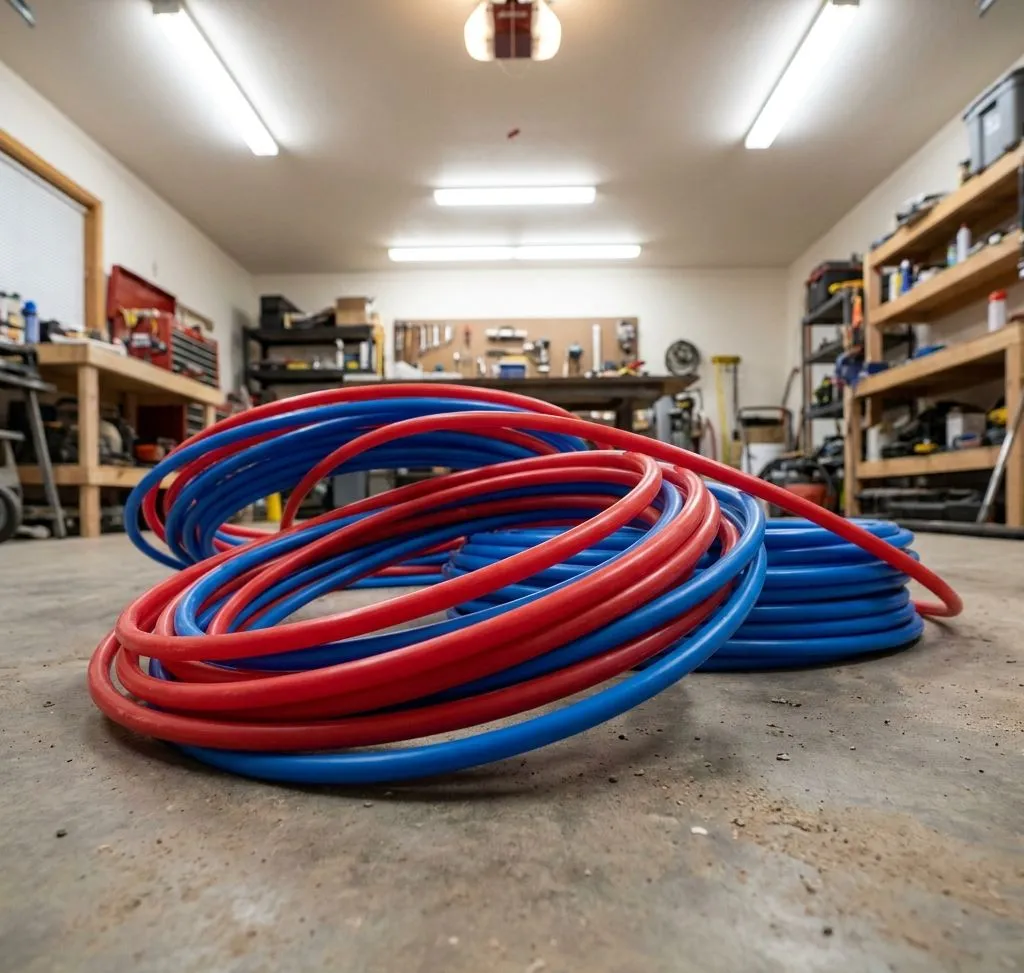
2. Pipe material you choose. We install both PEX and copper. PEX is flexible, which means we can fish it through walls without opening them at every bend. That reduces drywall damage significantly. Copper requires more access points because it won't flex around corners. PEX wins on labor cost. Copper wins on perceived resale value and longevity (70 or more years versus 50 for PEX, though I've never seen PEX actually fail in DFW conditions).
3. What we find once we open the walls. On older Carrollton and Plano homes built in the 1960s and 1970s, galvanized supply lines are the norm. Sometimes they're corroded straight through in multiple spots before we even start. That adds time. If there are also polybutylene sections (common in 1980s Lewisville and Coppell builds), we route around those too, which changes the scope.
What Triggers a Full Repipe vs. Spot Repairs
Not every house with old pipes needs a full repipe today. Here's how I make the call after walking a home:
Repipe now:
- Galvanized pipes with visible interior scale (brown water at first flush, even for a second)
- Multiple pinhole leaks in different parts of the house
- Water pressure under 40 PSI with no PRV or pressure booster problem
- Home is pre-1985 and pipes have never been replaced
- Polybutylene supply lines anywhere in the home (these will fail and most insurance carriers now exclude them)
Spot repair or wait:
- Single isolated leak on an otherwise sound system
- Home built after 1995 with original PEX or copper
- Water pressure is fine, no discoloration, just one complaint area
I'd rather talk you out of an unnecessary repipe than sell you one. We do spot repairs all day. A water line repair on a healthy section of pipe is $400 to $900. A repipe is $5,000 to $12,000. Those are very different conversations.
The DFW-Specific Problem: Hard Water and Galvanized Pipe
Dallas water runs 8 to 12 grains per gallon hardness. That is on the high end for a major metro. Hard water deposits calcium inside galvanized supply lines at an accelerated rate compared to softer-water cities. The result: a galvanized pipe that might last 40 years in Chicago lasts 25 to 30 years in North Texas before the interior becomes so restricted that water pressure drops noticeably.
In Carrollton and the older Plano subdivisions near Legacy West, we see galvanized lines where the interior bore has shrunk from the original 3/4 inch to under 3/8 inch from mineral scale. You literally can't push enough water through it. A whole-house repipe fixes that permanently. A water softener slows future scale but doesn't fix the existing restriction.
What the Process Actually Looks Like
Day 1: We open access points (wall sections, sometimes ceiling panels), run all new supply lines to every fixture, and cap the new lines temporarily. Water is off for most of this day.
Day 2: We make final connections to fixtures, install new shutoff valves, test the system under pressure, check every connection, and clean up. Water is back on by end of day.
Day 3 (larger homes): We finish the second story or any bathroom where the tile work requires more careful access patching.
During the job, water is shut off only to the section being actively connected. We work house by house, not floor-wide shutdowns.
After we're done, a city inspector walks the permit on gas-adjacent work and on any full repipe in Carrollton, Plano, and Frisco. We schedule and handle that. You don't deal with the city.
Does Insurance Cover a Whole-House Repipe?
Short answer: no, not the pipe replacement itself. Texas homeowner's insurance covers sudden and accidental water damage from a burst pipe. It does not cover the aging pipe that burst. That is considered normal wear.
What we see occasionally: a homeowner who had a burst pipe, filed a claim for the water damage restoration, and then used the renovation disruption as the occasion to repipe the whole house on their own dime. That makes sense. You're already opening walls. Do the repipe while the drywall is open.
If you have a slab leak that requires opening the foundation, insurance may cover the leak repair cost but rarely the full pipe reroute. Ask your adjuster before assuming.
Polybutylene Pipe: The Hidden Repipe Driver in DFW
Between roughly 1978 and 1995, builders in the DFW market used polybutylene supply pipe extensively. It was cheaper than copper and fast to install. It's also failed across millions of homes nationally, and the failure rate in North Texas is accelerated by our water chemistry.
Polybutylene reacts with chlorine and other disinfectants used in municipal water treatment. The interior of the pipe degrades and develops micro-cracks that eventually split. The pipe often fails at fittings first, where the plastic acetal connectors are even more vulnerable than the pipe itself.
If your home was built between 1978 and 1995 and you haven't confirmed the pipe material, it's worth checking. Polybutylene is gray, flexible, and usually runs in the same areas as copper or PEX. The fittings are gray or white plastic, not brass or copper. If you have it, schedule a repipe before it fails. Most major insurance carriers now exclude polybutylene claims or are phasing it out of coverage entirely.
Homes in Coppell and Lewisville built in the late 1980s have a high polybutylene rate. We've done a significant number of polybutylene repipes in those cities specifically.
How We Give You an Honest Quote
Every repipe quote we give starts with a walk-through. We look at pipe material, home layout, attic accessibility, and whether any areas have been remodeled. Some homes are straightforward. Others have been added onto, have finished basements (rare in DFW but not unknown), or have attic spaces filled with insulation over the pipe runs.
We tell you the price before we start. If we open a wall and find something that changes the scope, we stop and tell you before continuing. No surprises after the job is done.
The quote includes:
- Full material list (PEX or copper, your choice)
- Labor estimate in hours
- Number and location of access points we plan to open
- Permit filing
- Access hole patching
- New shutoff valves at all fixtures
- Expansion tank if required by your city code
- Removal and disposal of old pipe
What it does not include: drywall finishing, paint, or tile work after access patches. That's a separate trade. We patch the access cleanly. A painter or drywall finisher does the finishing coat.
What to Do Next
If you're seeing rust-colored water, weak pressure, or pinhole leaks in an older Carrollton, Frisco, or Plano home, call us at (972) 210-9033. We'll come out, walk the house, and give you a written number. The service call applies toward the job if you hire us. No obligation.
We've repiped a lot of homes in north DFW. I know what's fair to charge and I know when a repipe is actually needed. If yours isn't, I'll tell you that instead.
Frequently Asked Questions
How long does a whole-house repipe take? Most single-story DFW homes take 2 days. Two-story homes with more complex layouts run 3 days. We don't rush, but we don't drag either. Most customers have full water by end of day 2.
Will the repipe damage my walls? We cut access holes, not renovation-size openings. On PEX jobs, access points are smaller because the pipe flexes through existing runs. We patch the drywall. Painting and texture matching is on you or your painter.
PEX or copper for a Dallas home? For most homes we do, we recommend PEX-A. It handles Texas temperature swings well, won't corrode, and costs less to install. Copper is a legitimate choice if you plan to sell in a market where buyers ask about pipe material. Both last decades in this climate.
What is included in the quoted price? All materials, labor, new shutoff valves at every fixture, expansion tank if your city requires it, and permit filing. Drywall patching (not finishing or painting) is included. We remove and dispose of the old pipe.
Do you do repiping in The Colony or Grapevine? Yes. We serve the full northern DFW corridor including The Colony, Grapevine, Little Elm, and everywhere in between. Same pricing, same crew.