
I get called to homes regularly where someone has already had a leak repair done and the water bill is still high, or the damp spot on the floor came back. The issue was a slab leak the whole time. It had been misdiagnosed as a high water bill, soft soil, or humidity condensation.
Here is a diagnostic framework for separating a slab leak from other leak types.
What Makes a Slab Leak Different
A slab leak is a leak in the supply or drain lines that run beneath your home's concrete foundation. In North Texas, those lines are usually copper, galvanized, or cast iron, and they run through or under a foundation that sits directly on expansive clay soil.
The clay movement is constant. Every wet season it swells. Every drought it contracts. Over 30 or 40 years, that movement fatigues pipe joints until one of them cracks or separates. The water escapes into the ground or, over time, saturates upward through the slab itself.
This is different from:
- A supply line leak under a sink (above-slab, visible)
- A drain leak at a P-trap (visible under the cabinet)
- A water heater drip (isolated, easy to locate)
- A roof leak that shows on ceiling or walls above
- An irrigation leak in the yard
Slab leaks are hidden by design. The only way to confirm one is electronic detection or pressure testing.
The 7 Indicators of a Slab Leak Specifically
No single indicator is definitive on its own. The more of these that appear together, the more confident we are before even picking up the detection equipment.
1. Water bill spike with no visible leak. You have checked every toilet. Every faucet. The irrigation controller. Nothing is running. And the bill went from $80 to $180. Water is going somewhere. If it's not above the slab, it's probably below.
2. Warm spot on the floor. This one is specific to hot water line slab leaks. When a hot water supply line under the slab develops a leak, the escaping hot water warms the concrete above it. On tile floors, this is a distinct warm patch that doesn't match ambient temperature. On carpet, the carpet feels warmer than surrounding areas, or feels slightly damp. If you feel a warm spot that is roughly the size of a throw rug, stop and mark that location. That's where the leak is.
3. Sound of running water with everything off. Turn off all appliances, ice makers, and irrigation. Stand quietly in the middle of the home and listen. A pressurized water line leak makes a hissing or trickling sound that transmits faintly through the concrete. In a quiet home, some people can hear it directly. A plumber with acoustic detection equipment will find it in minutes.
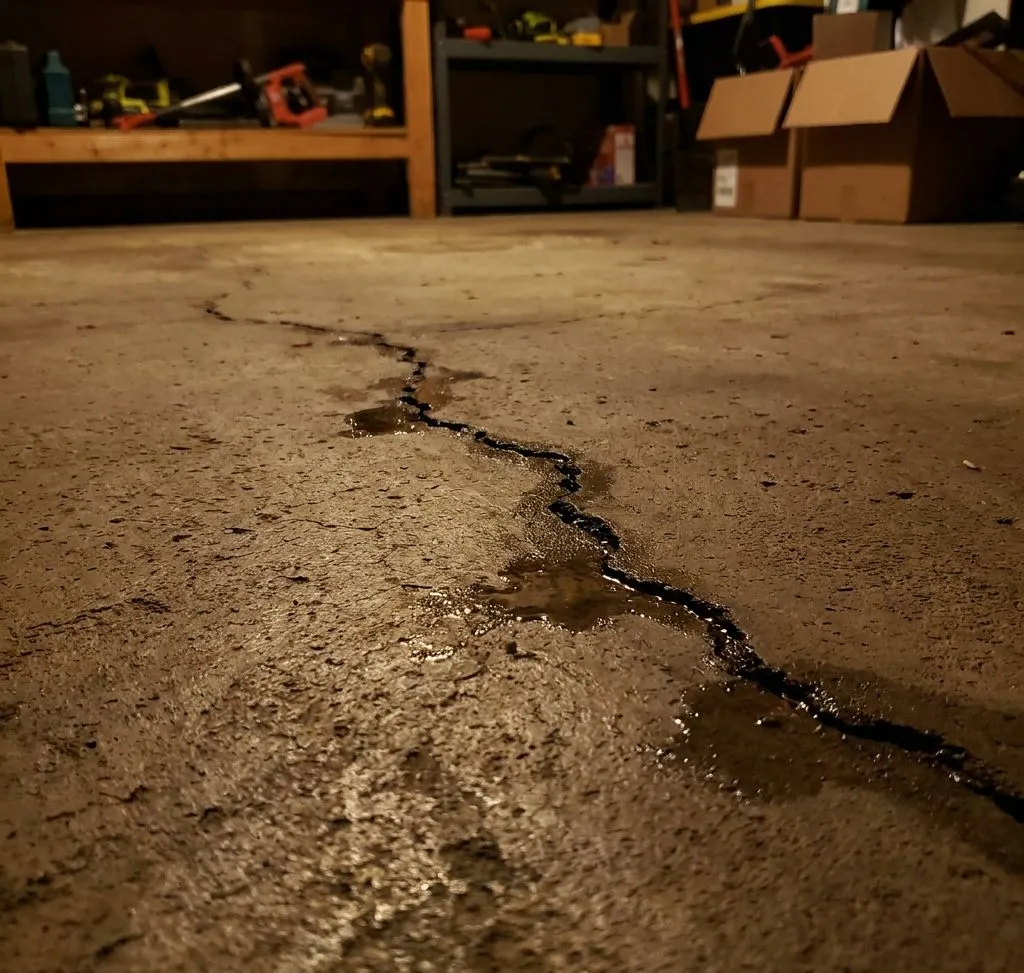
4. Damp or wet areas on the floor, not near any fixture. Moisture coming up through the slab appears in strange places, not near a bathroom or kitchen. Damp spots along a hallway wall. Soft spots in carpet in a bedroom. Discoloration on hardwood along a baseboard in an area with no plumbing above it. These are all slab-leak indicators.
5. Foundation cracks accompanied by a water bill spike. Foundation cracks happen in DFW from soil movement. But if new cracks appear at the same time a water bill spikes, the two may be connected. Escaping water saturates soil unevenly, which causes differential foundation settlement. A structural engineer and a plumber should both look at this scenario.
6. Mold or mildew smell with no visible source. Water saturating up through a slab that's covered in carpet creates mold conditions underneath the carpet pad within weeks. Homeowners often replace carpet before identifying the source, which solves the symptom temporarily. The smell returns because the moisture source is still active.
7. Low pressure that developed gradually over months. A pressurized supply line leak relieves pressure continuously. Over months, the available pressure at fixtures drops. This is slow enough that most people don't notice until they compare how a shower felt two years ago to today. If a whole-house repipe check rules out scale buildup as the cause, a slab leak is on the differential.
Slab Leak vs. Other Leak Types: Side-by-Side
| Symptom | Slab Leak | Fixture Leak | Irrigation Leak | Roof Leak | |---|---|---|---|---| | Water bill spike | Yes | Sometimes | Yes | No | | Warm floor spot | Yes (hot line) | No | No | No | | Running water sound when off | Yes | Sometimes | No | No | | Damp carpet away from fixtures | Yes | No | No | Sometimes | | Foundation cracks | Sometimes | No | No | No | | Water damage above ceiling | No | No | No | Yes | | Visible puddle under sink | No | Yes | No | No | | Soggy yard section | Sometimes | No | Yes | No |
The columns don't lie perfectly. But if you are checking "Yes" on warm floor, running water sound, and a high water bill and there's nothing visible above grade, a slab leak is the working hypothesis until proven otherwise.
How We Confirm a Slab Leak Without Jackhammering
We use two tools. The first is electronic acoustic detection, a sensitive microphone pressed to the slab that amplifies the sound of pressurized water escaping a pipe. We move it methodically across the floor until the signal peaks. That pinpoints the leak location to within a few inches.
The second is thermal imaging. A forward-looking infrared camera shows temperature differences on the slab surface. A hot water leak shows as a warm anomaly on an otherwise uniform slab. Used together, acoustic and thermal detection locate most slab leaks within an hour without touching the floor.
For a full overview of our slab leak detection and repair process, see the service page.
Repair Options After Confirmation
Once we confirm a slab leak, there are three paths depending on what we find:
Spot repair: We open the slab at the exact leak location, replace the damaged section of pipe, and patch the concrete. Best for an isolated failure in otherwise healthy pipes. Takes 1 day.
Reroute: We abandon the failed under-slab line completely and run a new line through the walls or attic. No slab opening required. Takes 1 day. Better long-term solution for pipe that's nearing end of life even beyond the current leak.
Full repipe: If the under-slab pipes are original copper or galvanized and already showing multiple failure points, we replace everything and route the new supply lines through the walls. This is the permanent fix for older homes in Carrollton and Plano with 50-year-old foundations. See our whole-house repipe guide for cost details.
The DFW Clay Soil Factor
North Texas homes have some of the highest slab leak rates in the country precisely because of the soil. The clay moves year-round. In a dry year like 2022 or 2023, the shrinkage is dramatic enough to visibly shift foundations. Every inch of movement translates to stress on every pipe joint under the slab.
Homes in Frisco near Stonebridge Ranch, in Plano along the Legacy area, and older sections of Carrollton near the Josey Lane corridor are high-frequency areas for slab leak calls. If your home is 30 or more years old and hasn't had a slab inspection, it's worth a diagnostic call before something fails unexpectedly.
Slab Leak Cost Ranges for DFW
Before you call anyone, here are the real numbers on what slab leak repair costs in the north DFW market:
- Leak detection only (acoustic + thermal): Covered under our service call. If you hire us for the repair, it applies as a credit.
- Spot repair (open slab at one point, replace section, patch concrete): $1,500 to $3,500. Depends on depth of the pipe, slab thickness, and how close to a wall or fixture the access needs to be.
- Reroute (abandon under-slab line, new supply line through walls): $1,800 to $4,500 per line rerouted. Most homes need 1 to 3 lines rerouted depending on the failure.
- Full under-slab repipe rerouted through walls: $6,000 to $12,000 for an average DFW home. Permanent solution for a home where multiple leaks are likely on aging copper. See the full repipe cost guide for the detailed breakdown.
The repair type we recommend depends on the pipe age and condition beyond the current leak. A 50-year-old copper system with one confirmed leak almost certainly has other weak points. A reroute or full repipe is better long-term value than patching a pipe that will fail again in 18 months.
Frequently Asked Questions
How much does slab leak detection cost? Our service call covers the full detection process. If we find a slab leak and you approve the repair, the service call applies toward the job. The detection equipment, acoustic and thermal, is part of the call.
Can I just ignore a slab leak if the water bill increase is small? No. The bill is the small problem. Water saturating under and through your foundation causes soil erosion, differential settlement, and eventually structural movement. Catching it at the point of a $50 bill spike is far cheaper than catching it after foundation damage.
How long does slab leak repair take? Spot repair: 1 day. Reroute: 1 to 2 days depending on the run. Full repipe with wall routing: 2 to 3 days. We give you the full scope before we start.
Does homeowners insurance cover slab leaks? Policies vary, but most Texas homeowner's policies cover the resulting water damage (floor replacement, drywall) but not the pipe repair itself. The distinction is the damage caused by the leak versus the plumbing work to fix the leak. Document everything and contact your adjuster.
Do you serve The Colony and Lewisville? Yes. We handle slab leak detection and repair throughout northern DFW including The Colony, Lewisville, Coppell, and Grapevine.